
How to Hire a Podcast Editor for Your Business
 By HireMango Team, HireMango6 min read
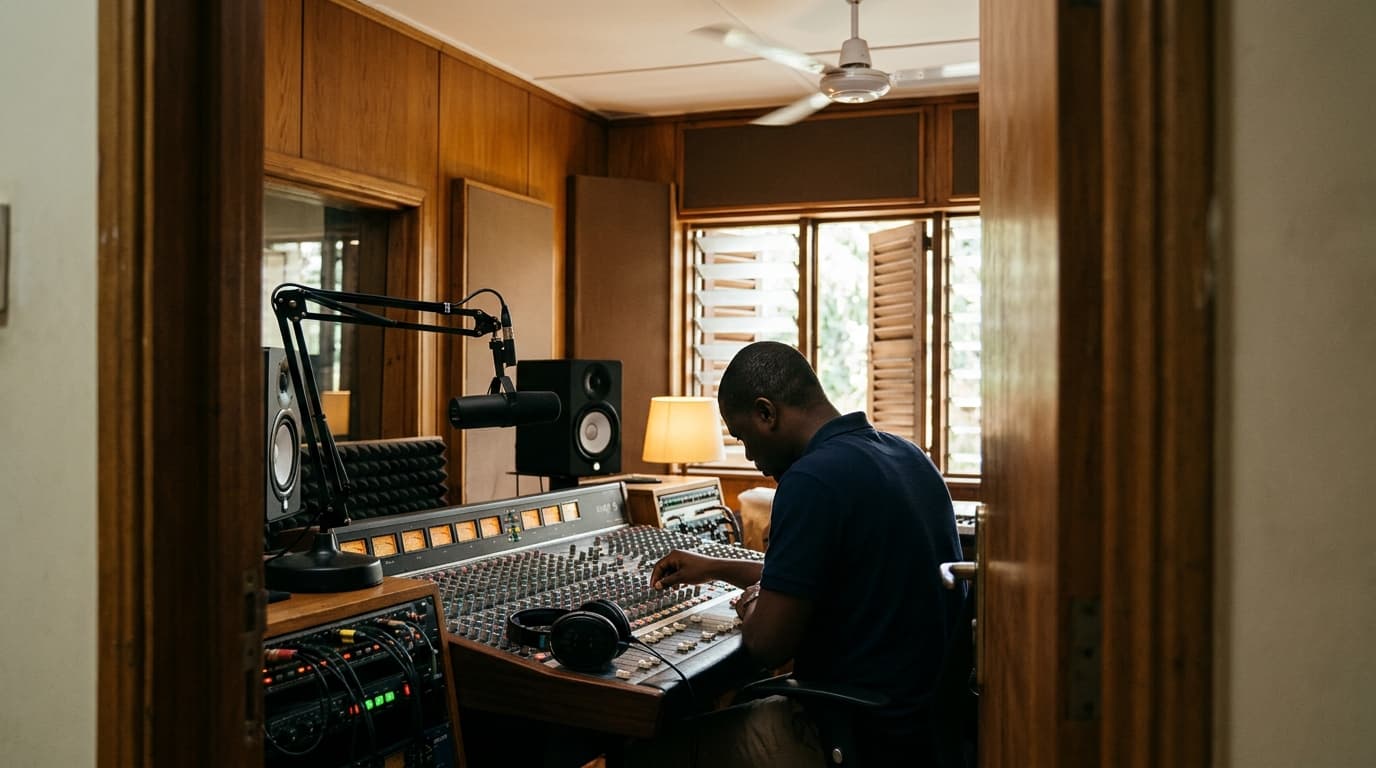
You recorded four episodes last month and published one. The other three are waiting in a folder for someone to edit them.
To hire a podcast editor for your business, do three things in order. Define the job: which formats, how many episodes a week, and whether clips and show notes are included. Source candidates who have edited shows like yours. Then run a paid test edit on your own raw audio before you commit. This guide walks through each step, plus how to set up the first month so the working relationship holds.
What does a podcast editor actually do, and when do you need one?
A podcast editor turns raw recordings into publishable episodes: cutting, leveling and cleaning audio, adding intros and music, and handing back a file you can upload. Many also produce clips, show notes and a video cut.
You need one when editing starts to cost you more than the hours. The signs are practical. Episodes slip past their release date. You are the one opening the editing software at 11 p.m. A backlog builds and the show loses its rhythm.
Business podcasts have a particular version of this problem. The show is usually a marketing channel, so a late episode is a late lead source, not just a late hobby project. If the show is part of how your agency or company finds clients, an editor is production infrastructure, the same way a designer is.
Scope the role before you look for anyone. Write down:
- Episodes per week or month, and average length
- Interview, solo or panel format, and the usual audio quality of your guests
- Extras you expect: short clips, show notes, audiograms, a YouTube cut
- Your publishing day, so turnaround is a real number and not a hope
Those four lines decide almost everything that follows. An editor who is brilliant at narrative storytelling shows may be a poor fit for a weekly three-person interview show.
Where do you find specialist podcast editors?
There are four main sources: freelance marketplaces, referrals from other show owners, production agencies, and a hiring provider that supplies dedicated remote professionals. Which one fits depends on how often you publish and how much you want to manage.
Freelance marketplaces give you the widest pool and the least filtering. You do the screening, and many applicants send the same generic sample. They work well for a show that publishes occasionally.
Referrals are the best signal when you can get them. Ask other show owners who edits their episodes and whether that person has capacity. Capacity is the catch. The good ones are usually full.
Production agencies handle everything from recording to publishing. You get a finished product, but you also get an account manager between you and the person doing the work, and less say over who that is.
A hiring provider matches you with a dedicated professional who works for you and no one else. HireMango helps companies and creators hire dedicated remote professionals from Latin America, Africa, Asia and the Middle East. We interview and vet candidates before you see them, and our time-to-match averages 7 days, which is time to first candidates, not time to hire. $2,500 to $4,000/mo, final quote depends on scope. If you want to see how the role is scoped, our podcast editor page lays it out, and the audio and video roles hub shows related hires.
If your main question is budget, our separate podcast editor cost breakdown covers rates and models in detail. This guide stays on the hiring process.
How do you vet a podcast editor's skills and fit?
Vet with work, not with a portfolio. A portfolio shows the best episode they ever finished. A test edit on your audio shows how they handle your guests, your pacing and your feedback.
Here is a vetting sequence that works for most businesses:
- Screen for format experience. Ask which shows they have edited and in what format. Interview shows, solo shows and narrative shows need different instincts.
- Run a paid test edit. Send 10 to 15 minutes of real, unedited audio with a one-page style note. Pay for it. Good candidates will not work for free, and a paid test tells you who is serious.
- Judge the questions, not only the file. A strong editor asks about your intro, your tolerance for filler words, and how aggressive to be with cuts. Silence on those points usually means they will guess.
- Check the tools. Ask what they edit in, how they do noise reduction and loudness leveling, and what they deliver (WAV, MP3, project files).
- Test how they take feedback. Send two or three revision notes on the test edit. You want targeted fixes, not a rebuild from scratch.
For deeper interview questions and red flags that apply to any remote role, see our guide on how to vet offshore candidates.
The pattern worth watching for is reliability. Good ears matter, but an editor who answers within a working day and flags problems early is worth more than a slightly better cut that arrives late. If your show doubles as a video channel, our guide to hiring a video editor covers the overlap.
We tried contractors for years with constant churn and reliability issues. HireMango delivered someone full-time, highly skilled, and up to date on best practices. The onboarding was fast, the work was better, and I didn’t have to hand-hold. I’d recommend them to anyone.

What should the first month of onboarding look like?
Start with one episode, a written style guide and a fixed review rhythm. The first month is for calibration, so expect the first edit to need notes.
Give your new editor these on day one:
- Three past episodes you consider well edited, plus one you were unhappy with and why
- A short style guide: how you handle filler words, long pauses, crosstalk and guest mistakes
- Your intro, outro, music and brand assets in one shared folder
- A named person who answers questions, and the hours you are reachable
Then set the cycle. Raw audio goes in by a set day. A first cut comes back by a set day. You send consolidated notes once, not in five messages. After the second or third episode, the notes shrink, and that is the point of the exercise.
At the end of week four, sit down and decide what to hand over next: clips, show notes, scheduling and uploads. Add scope only after the core edit is steady. If a hire doesn't work out, HireMango's guarantee applies: we'll find you a replacement at no extra cost, with no expiration on the guarantee.
Frequently asked questions
If you publish occasionally, a freelancer is simple and flexible. If you publish weekly, or want clips and show notes handled the same way every time, a dedicated editor who works only for you removes the repeated briefing and handoff for each episode. The deciding factor is how steady your schedule is.
Send 10 to 15 minutes of raw, unedited audio from a real episode, plus a one-page style note covering intro, music, filler words and how heavily to cut. Pay for the test. Using your own audio shows how the editor handles your guests and pacing, which no portfolio can.
HireMango's average time-to-match is 7 days, which means time to first candidates, not time to hire. After that you interview your shortlist, run a test edit with your top choice and agree on scope. Pricing runs $2,500 to $4,000/mo, with the final quote depending on role and scope.
Clear raw files, a style guide, brand assets, a publishing calendar and one person who answers questions quickly. Most editing problems trace back to missing context, not missing skill. The more specific your first brief and your first round of notes, the faster the edits start matching your show.
Often yes. Podcast editing, short clips and show notes share the same source material, so one professional can usually cover all three once the core edit is steady. Confirm it during scoping, so the role and the quote reflect what you expect. See HireMango for how matching works.
Want to hire your next role without running the search?
HireMango places senior international full-time hires in seven days. Pre-vetted, dedicated to your business. Starting at $2,500/month.
Don't pay until you hire. Free replacement, anytime.

HireMango Team
HireMango
Written by the HireMango team, from our work helping companies hire and support global remote professionals.
Explore roles to hire
First candidates in about a week · Don't pay until you hire
Explore more of HireMango
Browse Roles
Specialties we place, with rate ranges and what good looks like.
Offshore Hiring Guides
Evergreen guides to hiring offshore: roles, cost, vetting and management.
The HireMango Blog
Guides, data, and role deep dives for hiring remote teams.
Hiring Guides
Step-by-step playbooks for sourcing, vetting, and onboarding remote professionals.