
How to Hire a Freelance Podcast Editor
Hiring a freelance podcast editor? Here is what the job covers, which samples prove skill, where to find vetted candidates, and how to run a trial.
 By HireMango Team, HireMango7 min read
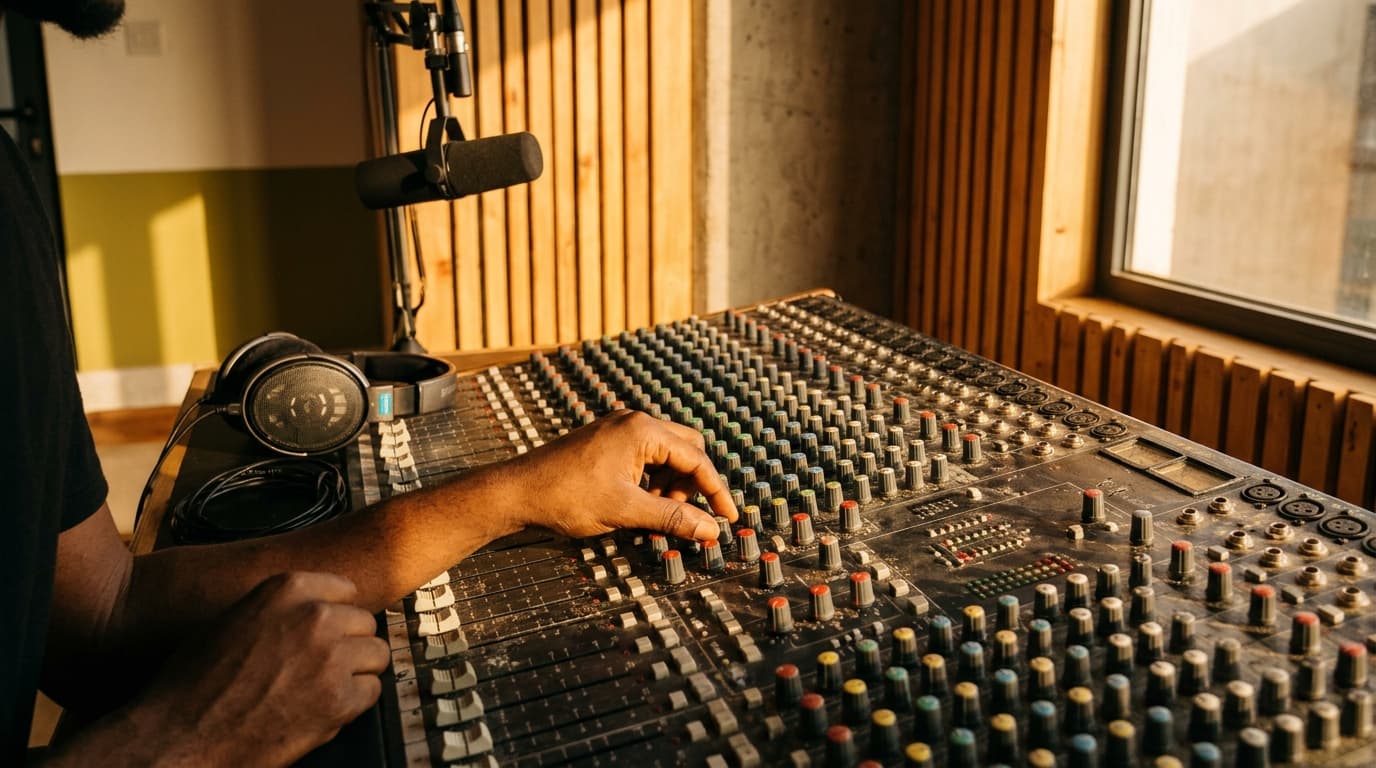
You recorded four episodes last month and published one. The other three are sitting in a folder, waiting for someone to cut the dead air, fix the levels and make your guest sound like they were in a studio.
That someone is a freelance podcast editor, and the hire goes well when you do four things: define the job before you post it, judge samples instead of résumés, pay for a small trial on your own audio, and give the new editor a written brief in week one. The rest of this guide walks through each step.
What does a freelance podcast editor actually do?
A freelance podcast editor turns raw recordings into publish-ready episodes. At minimum that means cleaning the audio, cutting mistakes and dead air, balancing levels and exporting a finished file to your spec.
Beyond that, the job splits into tiers, and you should decide which one you need before you talk to anyone:
- Clean-up edit: noise reduction, filler and long-pause trims, level matching, intro and outro added.
- Produced edit: everything above plus story shaping, music beds, ad slots and chapter markers.
- Full episode package: a produced edit plus show notes, audiograms, short clips and a video cut for YouTube.
Many first-time hosts ask for a clean-up edit and then wonder why the show still feels slow. If your listeners drop off in the first ten minutes, you probably need a produced edit. Say so in the brief.
What skills and samples should you look for?
Look for clean dialogue editing, consistent loudness and a good ear for pacing. A sample reel shows all three faster than a résumé does.
Ask every candidate for two or three finished episodes, plus the raw files for one of them if they can share it. Then listen for specific things. Breaths and mouth clicks should be handled, not stripped so far that the voice sounds robotic. Levels should stay even from one speaker to the next, and from the intro to the ad break.
Cuts should tighten a sentence without changing what the guest meant. Music should sit under the voice instead of fighting it.
Tools matter less than people think. Most working editors use Descript, Adobe Audition, Reaper or Logic. Pick the one you already use if you want to open project files yourself, and ask the rest to export in a format you can review.
The soft skills decide whether the hire lasts. You want someone who flags a bad recording before editing it, asks what "tighter" means to you, and sends a delivery note instead of silence. If they only ever say "done," you will end up managing every file.
Where do you find vetted candidates?
There are four main routes. Each trades speed against how much screening you do yourself.
| Route | How it works | Best for | Watch out for |
|---|---|---|---|
| Freelance marketplace | Post a job, review applicants | One-off or very short projects | You do all the vetting, and quality varies widely |
| Your own network | Ask other podcasters who edits their show | A single trusted referral | Slow, and the editor may be at capacity |
| Job boards and social | Post a role, run interviews | A permanent in-house hire | Weeks of screening, many unqualified applicants |
| Hiring provider with vetted candidates | A provider screens first and sends a shortlist | Ongoing weekly work you want off your plate | Not the right fit for a single episode |
If you publish once a month, a marketplace or a referral is probably enough. If you publish weekly, the screening time starts to cost more than the hire. That is where a provider earns its place.
HireMango helps companies and creators hire dedicated remote professionals from Latin America, Africa, Asia and the Middle East. Our average time-to-match is 7 days, and that means time to first candidates, not time to hire. You still interview them and choose. Our podcast editor page shows what that looks like, and the audio and video roles page lists the related editors you can hire. For a broader look at screening any remote candidate, read our guide to vetting remote candidates.
We tried contractors for years with constant churn and reliability issues. HireMango delivered someone full-time, highly skilled, and up to date on best practices. The onboarding was fast, the work was better, and I didn’t have to hand-hold. I’d recommend them to anyone.

How do you run a trial that tells you the truth?
Pay for a short trial on your own audio, with a written brief and a deadline. Samples show what someone can do. A trial shows how they work with you.
Here is a trial that fits in one week:
- Pick a real file. Use 20 to 30 minutes of an episode you have not published. Include a few real problems: a noisy stretch, a long tangent, an uneven guest.
- Write the brief. Give the length target, the tone, what to cut, what to keep, your intro and outro files, and a reference episode you like.
- Set a deadline and a format. For example, an MP3 at your loudness target and a short note on what they changed.
- Send one round of feedback. Make it specific, such as "tighten the first five minutes" or "the guest drops in volume at 14:20."
- Score the result. Rate audio quality, following the brief, speed of the revision and the quality of their questions.
Pay the trial fee even if you pass. Strong editors have options, and an unpaid test mostly filters out the experienced ones.
The revision round is where most of the signal lives. An editor who fixes exactly what you flagged, and tells you what else they noticed, is worth far more than one who nails the first cut but argues about the second.
How should you onboard a new podcast editor?
Give your editor a one-page style guide, shared access to your files and a fixed weekly rhythm in the first two weeks. Most early friction comes from unwritten preferences.
The one-pager should cover your loudness and export settings, and how you want filler words, long pauses and tangents handled. Add your intro, outro, music and ad-slot files, with where each one goes.
Say where raw files arrive, where finished files go and what to name them. Finish with who approves an episode and how long you take to respond.
Then keep the first episodes tight. Review the first two in full, leave notes in one place and move to spot-checks by the fourth. After that, a short weekly note is enough.
"Our business and brand would not be what they are today without Kiran's help. If I ask him for something, he doesn't just deliver, he goes above and beyond to create the best possible product. I love having someone I can lead instead of someone I have to manage." Adam Salisbury, Owner, Superhero Training Academy
That last line is the goal. A good brief in week one is what lets you lead instead of manage.
If a hire does not work out, our guarantee applies: if a placement doesn't work out, we'll find you a replacement at no extra cost, with no expiration on the guarantee. Each team member works for one client only, so your editor is not splitting attention across other shows.
When is a freelance podcast editor the wrong choice?
A freelance podcast editor is the wrong choice when you need steady weekly output plus clips, show notes and video, or when you do not have time to write a brief and review work. In both cases a dedicated editor fits better.
Freelancers are a good fit for a seasonal show, a limited series or a backlog clear-out. We lean toward a dedicated editor once you publish weekly, because the handoff cost of briefing, uploading and chasing adds up across every episode. HireMango's podcast editors run $2,500 to $4,000/mo, with the final quote depending on role and scope. For the full picture of what drives that number, see What Does a Podcast Editor Cost in 2026?, and for the video side of the same hire, read How to Hire a Video Editor Who Actually Delivers.
If you are ready to see candidates, HireMango can send a shortlist of vetted podcast editors you can interview this week.
Frequently asked questions
Start with referrals from other podcasters, then check finished samples and run a paid trial. Marketplaces give you volume but leave all the vetting to you. A hiring provider screens first and sends a shortlist, which saves time if you publish weekly. Whichever route you take, judge the work on your own raw audio.
Ask for two or three finished episodes, the tools they use, their usual turnaround and how they handle revision notes. Then ask how they would fix a specific problem from your show, such as a noisy guest. Their answer shows whether they listen and think before they edit.
One week is enough. Give them 20 to 30 minutes of unpublished audio, a written brief and one deadline, then send a single round of feedback. You learn about audio quality, following instructions and how they take notes, which is what predicts a good long-term fit.
Hire a freelancer for a limited series, a seasonal show or a backlog. Choose a dedicated editor when you publish weekly or want clips, show notes and video handled consistently. A dedicated editor learns your show and stops needing a fresh brief every episode.
Our average time-to-match is 7 days. That is the time to first candidates, not the time to hire. You interview the candidates we send, choose who fits your show and agree the start date.
Want to hire your next role without running the search?
HireMango places senior international full-time hires in seven days. Pre-vetted, dedicated to your business. Starting at $2,500/month.
Don't pay until you hire. Free replacement, anytime.

HireMango Team
HireMango
Written by the HireMango team, from our work helping companies hire and support global remote professionals.
Roles this applies to
Explore roles to hire
First candidates in about a week · Don't pay until you hire
Explore more of HireMango
Browse Roles
Specialties we place, with rate ranges and what good looks like.
Offshore Hiring Guides
Evergreen guides to hiring offshore: roles, cost, vetting and management.
The HireMango Blog
Guides, data, and role deep dives for hiring remote teams.
Hiring Guides
Step-by-step playbooks for sourcing, vetting, and onboarding remote professionals.